The Complete Love Languages Guide: All 5 Types and How to Apply Them in Relationships
An introduction to Gary Chapman's five love languages — words of affirmation, quality time, receiving gifts, acts of service, and physical touch — and how people use them with a partner, family, friends, and at work. Also covers the research limit on the five-type split.
Last reviewed 2026-04-14
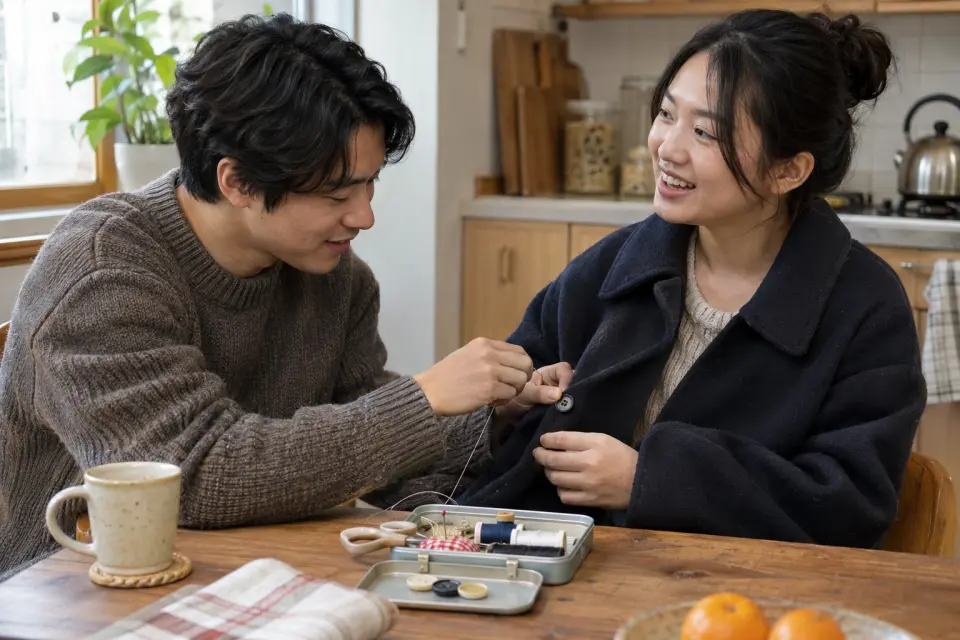
What Are Love Languages?
Love Languages is a framework from marriage counselor Gary Chapman, introduced in his 1992 book The Five Love Languages. The observation: people express and receive love in different ways, and if you miss that difference, a real effort can still leave the other person feeling unloved.
Through decades of couples counseling, Chapman came to see many relationship problems as one mismatch: a person is showing love, and the partner does not feel it. His explanation was that their primary love languages differ. That is a proposal from counseling practice, not a finding research has simply confirmed.
1. The 5 Love Languages
These five are names for ways of giving and receiving care. They are not scores and not a ranking.
2. A Closer Look at Each Language
1. Words of Affirmation
People for whom this matters confirm love through what is said. It is not a request to hear I love you on a loop. It is a need for sincere recognition and thanks.
Ways to show care:
- You really came through on that. Thank you. (credit)
- I noticed how hard you worked on this. (specific appreciation)
- I am genuinely proud of you. (heartfelt praise)
- A text, a letter, or a voice message that carries real feeling
What tends to hurt (worth avoiding):
- Criticism, dismissive remarks, belittling comments
- Treating their effort as something that needed no thanks
2. Quality Time
Quality matters more than hours. Being in the same room while both of you look at your phones is not quality time. Full attention, and the sense that you are actually there, is the point.
Ways to show care:
- Put the phone down, meet their eyes, and listen
- Plan regular time for just the two of you, even if it is simple
- Join a hobby or activity they care about
- Travel, walks, shared meals. The togetherness is the point
What tends to hurt:
- Canceling plans often
- Being in the room but absent
- Drifting off while they are talking
3. Receiving Gifts
Love is felt in the meaning and the effort, not the price. The heart of it is: you thought of me.
Ways to show care:
- Remember something they wanted and surprise them with it
- Keep birthdays, anniversaries, and other marked days
- Bring back a small memento from a trip
- Offer something small if it was chosen with care
People for whom gifts matter are not materialistic by default. A gift is a visible token of care, and proof that someone thought of them and followed through. The cost matters less than the fact that you remembered.
4. Acts of Service
For this person, actions carry more than speeches. They want love shown, not only declared.
Ways to show care:
- Take the dishes or the cleaning when they are worn out
- Do the thing instead of only asking whether you can help
- Finish one item on their list
- When they are ill, pick up medicine or go with them to the clinic
What tends to hurt:
- Dropped promises and unfinished commitments
- Standing by while they struggle and pretending not to see it
5. Physical Touch
Physical contact is a language of safety and connection. It is not only about sex. Holding hands, a hug, a hand on the shoulder — everyday contact can matter more.
Ways to show care:
- Greet them with a hug
- Hold hands while watching something, or let them lean on you
- Hold them on a hard day
- Walk side by side, hands held or arms linked
What tends to hurt:
- Pulling away from touch
- Cutting off everyday contact on purpose during a fight
3. How to Notice Your Primary Language
Chapman suggests three ways to look. They are prompts for a conversation, not a test with a single correct score.
-
How do you show love? Watch how you usually express care. The way you give is often close to the way you hope to receive.
-
What hurts most? Which absence stings? If harsh words cut deepest, words of affirmation may matter most. If being left alone hurts most, quality time may be the larger language.
-
What do you keep asking for? Say that once. Please do not cancel. Why is there no touch? Repeated requests show the language.
4. When the Languages Differ
| 구분 | ||
|---|---|---|
| A (acts of service) cooks and cleans, while B (words of affirmation) feels uncared for because nobody says thank you | A says a specific thank you first. B names the cooking and cleaning out loud | |
| A (physical touch) reaches for a hand, while B (gifts) is waiting for an anniversary present | A remembers the anniversary. B tries to stay open to ordinary touch | |
| A (quality time) wants phones down and a real talk. B (acts of service) wants the housework finished first | B promises 30 minutes of full attention after the chores. A helps with the chores so the time together starts sooner |
5. Family and Work
Love languages are not only for couples. You can use the same five ideas in any close relationship.
Parent and child
| Child’s language | What a parent can try |
|---|---|
| Words of Affirmation | You worked hard. I am proud of you. |
| Quality Time | Homework together, family dinner, a shared game |
| Receiving Gifts | A small surprise, or something they mentioned, remembered |
| Acts of Service | Help with homework, a ride to school |
| Physical Touch | A hug, a hand on the hair, a high-five |
At work
If their main language is words of affirmation, public recognition and a real thank you tend to land. If it is acts of service, offering help first when things are hard builds trust. If it is quality time, a one-to-one conversation or a shared lunch thickens the relationship.
6. Research and Critique
| 구분 | ||
|---|---|---|
| A practical prompt for noticing yourself and a partner | Five boxes are simpler than a real person | |
| It names concrete things a person can try | The language someone leans on can shift with culture and circumstance | |
| The book has been widely read across languages | Self-report questions can be biased |
Love languages come from counseling experience. Research has not clearly supported the five-type split, or the idea that matching languages raises satisfaction (Impett et al., 2024). This guide does not claim the framework worked for millions of couples.
7. A Reflection on Love Languages
References
- Chapman, G. (1992). The Five Love Languages. Northfield.
- Impett, E. A., Park, H. G., & Muise, A. (2024). Popular psychology through a scientific lens: Evaluating love languages from a relationship science perspective. Current Directions in Psychological Science, 33(2), 87–92.
- Official site: https://www.5lovelanguages.com
- Wikipedia — The Five Love Languages: https://en.wikipedia.org/wiki/The_Five_Love_Languages