Horse year guide: the seventh animal in the race folktale
The horse is the seventh animal in a popular race folktale. This page covers the earthly branch Wu, the checked year pillars, when the zodiac year actually starts, and the traditional triad, six-harmony, clash, and harm. A birth year is not treated as proof of personality or of the future.
Last reviewed 2026-06-01
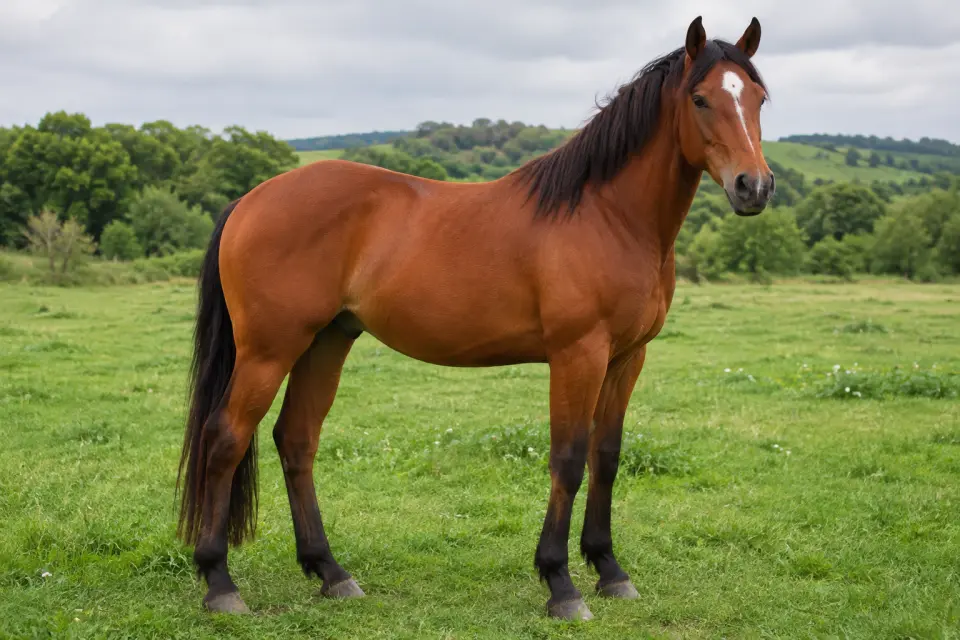
Seventh in a folktale
In a widely told race folktale, the horse is the seventh animal. Just as the horse is about to reach the finish, a snake that had been coiled around its hoof darts out, startles it, and slips in first. That is a folktale. Horses stand for speed and freedom in many cultures, East and West, but that symbol is not a measured personality of people born in a horse year.
What the tradition assigns
The rows below are traditional assignments. They are not a personality score.
| Item | Traditional assignment |
|---|---|
| Earthly branch | Wu (午) |
| Element and yin-yang | Yang fire |
| Direction | South |
| Time | The Wu double-hour, 11:00–13:00 |
Yellow, green, and red, the numbers 2, 3, and 7, and the carnation and jasmine show up often on modern popular lists. They are not values fixed by the old texts.
Year pillars and when the year changes
The heavenly stem is the year’s element name in the sexagenary cycle. The branch stays Wu; only the stem changes. This page does not read a personality from that name. The same stem and branch are the notation saju uses for the year pillar.
| Year | Year pillar | Element name of the stem |
|---|---|---|
| 1942 | 壬午 | water |
| 1954 | 甲午 | wood |
| 1966 | 丙午 | fire |
| 1978 | 戊午 | earth |
| 1990 | 庚午 | metal |
| 2002 | 壬午 | water |
| 2014 | 甲午 | wood |
| 2026 | 丙午 | fire |
The zodiac year does not start on January 1. In everyday use, the animal changes at Lunar New Year. In saju (Four Pillars), the year pillar changes at Ipchun, the Start of Spring, around February 4. Someone born in January or early February 2026 may therefore be a snake (乙巳), depending on which rule you use. In 2026, Ipchun falls on February 4 and Lunar New Year on February 17. We suggest reading the table above by the saju rule (Ipchun).
The portrait the tradition tells
The tradition often draws a horse year as someone lively who likes to keep moving, who feels hemmed in by restrictions and wants their own path, and who warms up to people quickly. It also adds warnings: attention that moves on fast, impatience with waiting, and acting before thinking. All of that is a traditional portrait. It is not a law for people born in those years.
Love and relationships
The tradition describes horse-year romance as starting fast and warm. New experiences shared together matter, and a relationship that ties freedom down too tightly is said to struggle. That is neither a diagnosis nor a destiny. As a wished-for partner, the tradition names someone who respects each person’s space and is still happy to head out together. That, too, is the tradition’s story.
Names of traditional relations
This page does not use star ratings or the language of destiny. It keeps the names.
| Name | Pair | Branches |
|---|---|---|
| Triad (三合) | Tiger, horse, dog | 寅午戌 |
| Six-harmony (六合) | Horse and goat | 午未 |
| Clash (冲) | Rat and horse | 子午 |
| Harm (害) | Ox and horse | 丑午 |
Triad and six-harmony are not a higher score, and clash and harm are not a lower one. They are the names this scheme has used. Whether two people get along depends on how they talk and adjust to each other, not on their animals.
Work
The tradition often names work with lots of movement and people: travel, sports, sales, broadcasting. That is not proof that those jobs fit best, and it is not a statistic saying horse years are common there.
Names kept only as birth years
Only the birth year is written, and it is not used as evidence of personality. Everyone below was born after both Ipchun and Lunar New Year, so they are horse years under either rule. Nelson Mandela was born in 1918 (戊午), Neil Armstrong in 1930 (庚午), Paul McCartney in 1942 (壬午), Jackie Chan in 1954 (甲午), and Kim Yuna in 1990 (庚午).
1966 and 2026: the fire horse
2026 is Bing-Wu (丙午), so it is the horse’s own year (benmingnian, 本命年). Chinese custom has people wear a red string or red clothing in their own year, but there is no evidence that it wards off bad luck. This page does not forecast the year.
Japan had a superstition that women born in a fire horse year (hinoeuma) are headstrong. In 1966, the number of births in Japan fell noticeably compared with the years before and after, and research has looked at why (Kaku, 1975). It shows a superstition shaping real choices. It is not evidence that people born that year carry a special energy.
Suggestions
- If you have several things on the go, try carrying just one of them all the way through this week.
- When you feel the urge to rush, try pausing for one breath. There is no guarantee of a better result, but it may help you avoid mistakes.
- Freedom and close relationships can go together. Try telling the other person, in words, how much space you need.
Related pages: horse tool · Chinese zodiac compatibility tool · 2026 fire horse year and the 12 animals · saju basics, chapter 1
References
Branch, element, direction, and animal symbol follow the tradition in the works below. An animal-year reading is tradition. There is no scientific evidence that a birth year sets personality or the future.
- 睡虎地秦簡《日書》
- 王充《論衡·物勢》
- Eberhard, W. (1986). A Dictionary of Chinese Symbols. Routledge.
- National Folk Museum of Korea, 『한국세시풍속사전』
- Kaku, K. (1975). Increased induced abortion rate in 1966, an aspect of a Japanese folk superstition. Annals of Human Biology, 2(2), 111–115.