Pig year guide: the last animal in the race folktale
The pig is the twelfth and last animal in a popular race folktale. This page keeps the earthly branch Hai, the checked year pillars, when the zodiac year changes, and the traditional triad, six-harmony, clash, and harm. A birth year is not treated as proof of personality or of the future.
Last reviewed 2026-06-01
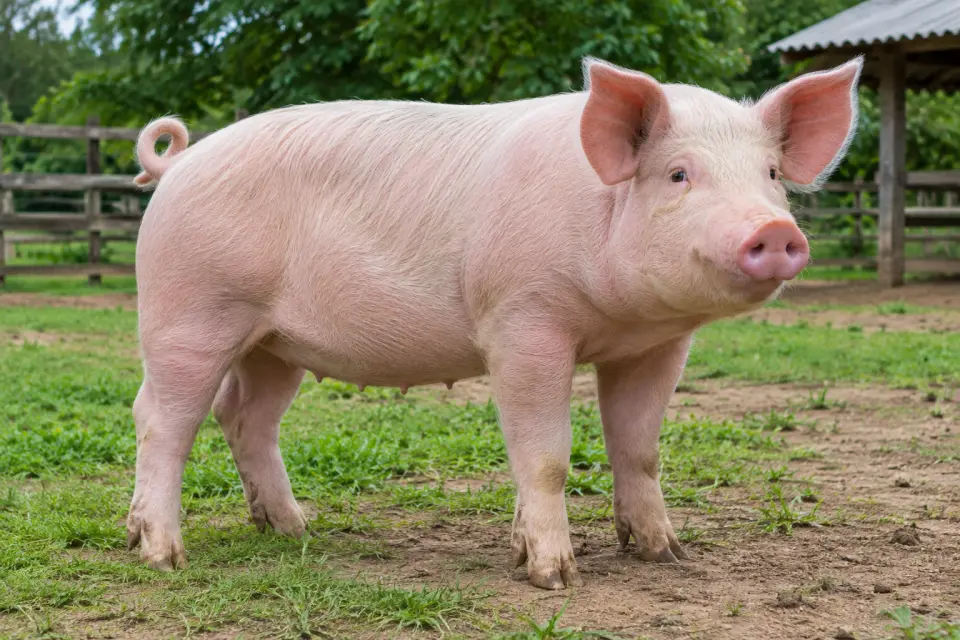
Last in a folktale
In a widely told race folktale, the pig is the twelfth and last animal. A common version says it arrived last because it stopped to eat and rest along the way. That is a folktale. It is not a measured personality of people born in a pig year. In East Asian culture the pig is often used as a symbol of plenty and good fortune. That, too, is a symbol.
What the tradition assigns
The rows below are traditional assignments. They are not a personality score.
| Item | Traditional assignment |
|---|---|
| Earthly branch | Hai (亥) |
| Element and yin-yang | Water. Yin by the order of the branches; in saju practice it is often used as yang water |
| Direction | Northwest |
| Time | The Hai double-hour, 21:00–23:00 |
Yellow, grey, and brown, and the numbers 2, 5, and 8 show up often on modern popular lists. They are not values fixed by the old texts.
When the zodiac year changes
There are two common start dates. The everyday zodiac animal usually changes at Lunar New Year. The saju year pillar changes at Lichun (Ipchun), the start of spring, around February 4. If you were born in January or early February, you may belong to the previous dog year, depending on which rule is used.
Year pillars
The heavenly stem is the year’s element in the sexagenary cycle. The branch stays Hai. Only the stem changes from year to year. This page does not read a personality from that name. The same stem and branch are the notation saju uses for the year pillar. That notation is not evidence of character.
| Year | Year pillar | Element name of the stem |
|---|---|---|
| 1947 | 丁亥 | fire |
| 1959 | 己亥 | earth |
| 1971 | 辛亥 | metal |
| 1983 | 癸亥 | water |
| 1995 | 乙亥 | wood |
| 2007 | 丁亥 | fire |
| 2019 | 己亥 | earth |
| 2031 | 辛亥 | metal |
2007, Ding-Hai: In Korea this year was widely called the «golden pig year». The stem Ding (丁) carries the element name fire, not metal. «Golden» was a popular nickname for the year. It is not evidence that people born then will have wealth.
The portrait the tradition tells
The tradition often draws a pig year as someone who tries to look on the bright side, who likes to share what they have, and who prefers sincerity to calculation. Warnings follow too: trusting people too easily, putting things off for the sake of comfort, and finding it hard to choose. All of that is a traditional portrait. It is not a law for people born in those years. This page also does not call anyone a born lucky person.
Love and relationships
The tradition speaks of pig-year love as warm and devoted. The story is someone who gives generously, wants to settle a quarrel quickly, and hopes for a warm home. There is also a warning that betrayal hurts deeply. That is neither a diagnosis nor a destiny.
Names of traditional relations
This page does not use star ratings or the language of destiny. It keeps the names.
| Name | Pair | Branches |
|---|---|---|
| Triad (三合) | Pig, rabbit, goat | 亥卯未 |
| Six-harmony (六合) | Tiger and pig | 寅亥 |
| Clash (冲) | Snake and pig | 巳亥 |
| Harm (害) | Monkey and pig | 申亥 |
Triad and six-harmony are not a higher score, and clash and harm are not a lower one. They are the names this scheme has used.
Work
The tradition often names work that hosts people and shares enjoyment: cooking, welcoming guests, teaching, or caring for others. It is not proof that those jobs fit best.
Names kept only as birth years
Only the birth year is written. It is not used as evidence of personality. Ernest Hemingway was born in 1899, and Hillary Clinton and Elton John in 1947.
2026
2026 is Bing-Wu (丙午). Hai (亥) and Wu (午) do not appear as a pair in the triad, six-harmony, clash, or harm table above. This page does not forecast the year.
Suggestions
- Before sharing, you might set a line for your own share. Giving everything away can leave you empty.
- This is not a call to stop trusting. Before a big decision, it may help to check once more.
- Enjoy the pleasures you have now. There is no guarantee that this brings luck.
Related pages: pig tool · saju basics, chapter 1 · rat year guide
References
Branch, element, direction, and animal symbol follow the tradition in the works below. An animal-year reading is tradition. There is no scientific evidence that a birth year sets personality or the future.
- 睡虎地秦簡《日書》 (3rd century BCE, excavated 1975).
- 王充. 《論衡》〈物勢〉 (1st century).
- Eberhard, W. (1986). A Dictionary of Chinese Symbols: Hidden Symbols in Chinese Life and Thought. Routledge.
- National Folk Museum of Korea (2004–2006). 『한국세시풍속사전』. National Folk Museum of Korea.