The Duet of Light and Shadow: Why Courage and Hope Meet on a Single Line
An essay about courage and hope calling on each other. The idea that deeper despair produces more hope is a metaphor, not a measured law.
Last reviewed 2026-02-09
Introduction: The Two Pillars That Sustain Us
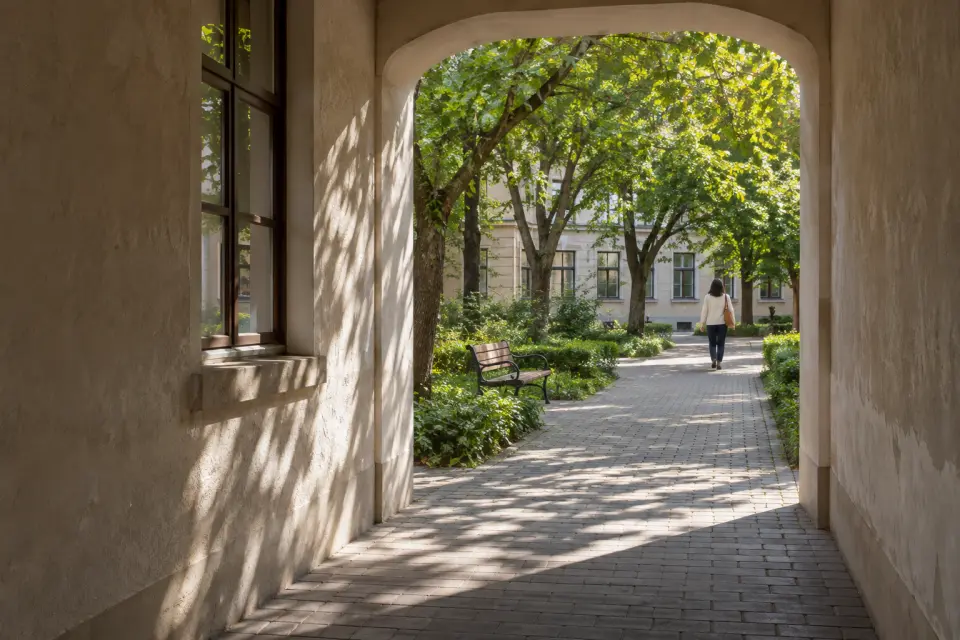
While it would be wonderful if life were always a sunlit plain, our journey often requires us to pass through deep caves where not a single ray of light enters. Walking in that darkness without a lantern is next to impossible. The two lanterns placed in our hands at such times are ‘courage’ and ‘hope.’
We often distinguish courage as the ‘strength to face fear’ and hope as an ‘optimistic expectation for the future.’ However, looking deeper, we find that these two are not separate emotions, but two branches growing from a single root. Like two sides of a coin, or like light and shadow. Today, I would like to talk about how these two states of mind call upon and sustain each other, eventually leading us out of the darkness.
1. The Anatomy of Hope: Not Vague Optimism, But a Volitional Choice
True hope is far from the naive optimism of “everything will be fine.” Václav Havel, the Czech leader and philosopher, said this about hope: “Hope is not the conviction that something will turn out well but the certainty that something makes sense, regardless of how it turns out.”
In other words, hope is not a prediction that the situation will improve, but an ‘establishment of attitude’ not to give up on the path I must take even if the situation is not good. This is not passive waiting, but an active process of assigning meaning. Havel’s hope is close to the power to say, even in pitch-black darkness, that this suffering can have meaning. It does not mean that without that thought a person cannot take a single step.
2. The Ignition Point of Courage: The Moment Hope Incarnates into Action
If hope is ‘certainty about meaning,’ courage is the ‘energy’ that converts that certainty into movement in reality. If hope is a mental map, courage is like the muscles of two legs climbing a rough mountain path holding that map. Without hope, courage has no direction, and without courage, hope has no substance.
Many people say they will act once they have courage. In behavior therapy, a person may try a small action while still afraid, and then see whether the anxiety eases. It is not a law that courage always follows action. This essay brings in hope as the sentence that supports that first step. When the thought “this act is not meaningless” is available, a person can stand on shaking legs. Here, courage is another name for hope that acts.
3. Encounter on the Line: The Reversal Found at the End of Despair
This essay uses an image: courage and hope can look sharper in the middle of despair. That is not a measured fact. When life is smooth, tragic courage and desperate hope are less often needed. Some stories say that, at a point that feels like the bottom, a person notices these two again.
Despair can be a metaphor for the material of hope, and fear a metaphor for the fuel of courage. There is no guarantee that hope waits at the other end of every line of despair. The claim that deeper despair produces a stronger rebound of hope is also a metaphor. Recovery differs from person to person.
4. Complementary Cycle: Belief Begets Action, and Action Strengthens Belief
Courage and hope are not a one-way relationship but a circulating one. Courageous action taken with small hope creates small changes in reality. That change again becomes the basis for greater hope: “Oh? It works?” Through this process, hope becomes solid, and courage becomes bolder.
The essay pictures hope, faint at first, growing when it meets the wind of courage. It does not claim this is the mechanism that gets people through a crisis. So do not blame yourself if you don’t see grand hope right now or don’t have the courage to jump in immediately. Just finding the smallest meaningful thing you can do today (hope) and moving very slightly (courage). Starting to roll this wheel of virtuous cycle is enough.
5. Conclusion: Darkness Cannot Defeat Light
Countless dots are imprinted on the straight line of our life. Among them are dots of tearful despair and dots of joyful achievement. The important thing is not to let the line connecting all those dots break. The glue of that connection is hope and courage.
If you are passing through a deep tunnel now, keep the image, not a promise. A long tunnel is a picture of a high mountain. It does not guarantee that every hardship ends. In your pocket, there is already a map called ‘hope’ and a flashlight called ‘courage.’ Now take them out, and walk silently and calmly. Your every step will soon become the way.
References
The concepts and studies mentioned above draw on the sources below.
- Havel, V. (1990). Disturbing the Peace: A Conversation with Karel Hvížďala. Knopf.