May Birth Flowers: Lily of the Valley and Hawthorn, Meanings and Gift Ideas
Explore May’s lily of the valley and hawthorn as cultural symbols, with verified traditions, botanical names, safety limits and optional gift messages—not predictions about people born in May.
Last reviewed 2026-10-07
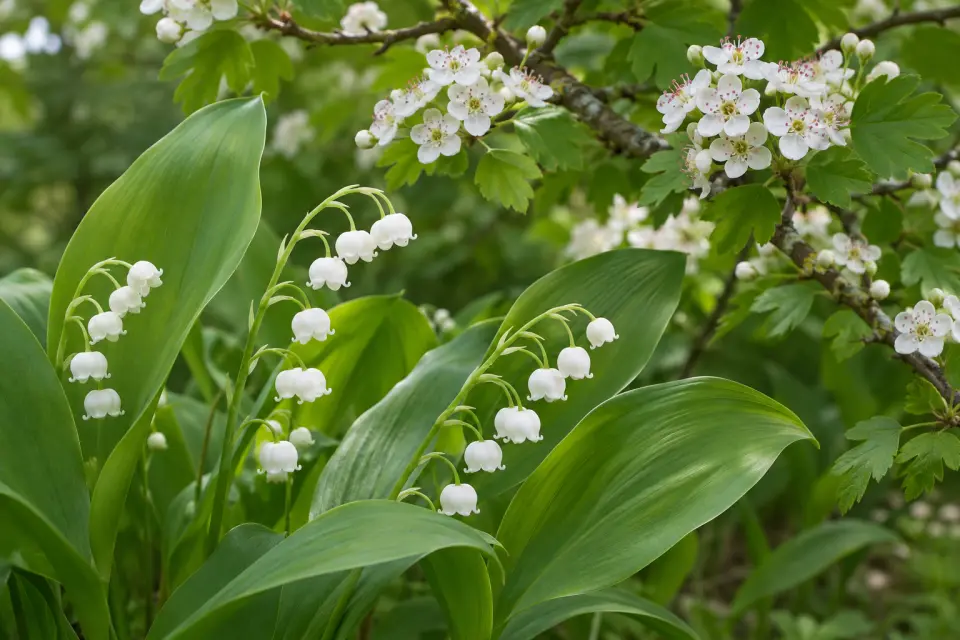
A birth-flower convention, not a rule about people
The Almanac’s birth-flower list associates May with lily of the valley and hawthorn. This is a cultural convention from that publication, not a globally certified calendar. Other lists may differ, and a birth month does not determine personality, relationships or fortune.
“May flowers” also does not mean these plants bloom in May everywhere. Climate and region matter. You can use the symbols for a birthday card without treating a flowering season as universal or a flower meaning as a prediction.
Lily of the valley: happiness as a message
The lily of the valley discussed here is Convallaria majalis, known for small white, bell-shaped flowers. The Almanac presents meanings including a return of happiness, purity and humility. These are flower-language associations, not facts about the person receiving the flower.
There are specific cultural examples. The French Ministry of Agriculture describes giving muguet on May 1 as a wish for good luck. The Royal Family’s announcement about Catherine’s 2011 bouquet confirms lily of the valley was included. This does not establish that every royal bouquet or culture uses it the same way.
Please keep symbolism separate from safety. The Royal Horticultural Society’s harmful-plant list identifies Convallaria majalis as toxic if eaten. Do not use it as an edible decoration or ingredient. A drawing or card can convey the same chosen message without offering a live plant.
Hawthorn: distinguish a symbol, a species and a health claim
Hawthorn is a common name covering plants in Crataegus. The botanical example here is Crataegus monogyna: the RHS profile describes a thorny deciduous tree with late-spring flowers and autumn fruit. Do not assume that a locally named hawthorn in another country is the identical species.
The Almanac associates the May flower with hope. You might choose that message for a new beginning, but it does not prove supernatural protection or predict the recipient’s future. We do not turn varied regional folklore into a single belief shared by all of Europe.
Historical use of hawthorn is also separate from proven treatment. NCCIH’s hawthorn information describes limited or conflicting evidence for health uses. A birth-flower article should not present guaranteed cardiovascular benefits or recommend hawthorn tea, supplements or doses. Links to heart or crown chakras are not evidence of a medical or psychological effect and are not offered here as factual claims.
Choose the form of the gift first
The following are editorial ideas, not rules attached to a birth month. Start with the recipient’s preferences rather than buying a flower because a list says you should.
| Form | What to consider | Possible use |
|---|---|---|
| Illustrated card | Do they like botanical designs? | A short birthday wish |
| Print or bookmark | Would a small object suit them? | A reminder of a shared memory |
| Live-flower arrangement | Is a live plant appropriate, and is it clearly non-edible? | Discuss the actual plant and arrangement with a florist |
| No flower | Do they prefer a different kind of gift? | Use the message alone or choose another motif |
There is no need to buy both flowers or substitute a different species without explaining the choice. A scientific name is useful when checking an actual plant, but a personal card need not pretend to be a botanical certificate.
Optional messages you can make your own
These examples were written by the editors; they are not quotations from a traditional flower-language dictionary.
- For a birthday: “Wishing you more moments worth smiling about this year.”
- For a new start: “I’m cheering you on as you take the next step.”
- For a shared memory: “This flower reminded me of a happy day we spent together.”
You can explain that the flowers appear in one May birth-flower tradition, then add a specific memory or wish. Avoid statements such as “you are naturally pure” or “this will protect you from misfortune”. Choosing a symbol is different from assigning someone a trait.
Questions and source boundaries
Must someone born in May like these flowers? No. Preference takes priority over the calendar.
Can a flower meaning promise luck or health? No. This article presents cultural associations and wishes, not tested predictive or therapeutic effects.
Can I use a photograph or illustration instead? Yes, as a gift idea. Use an image you own or have permission to use and check that it depicts the flower you intend.
The Almanac supports its birth-flower convention, the French and Royal Family sources support particular cultural examples, and RHS supports plant identity and the ingestion warning. NCCIH is used to limit health claims—not to connect a plant to chakras. The gift ideas and messages are editorial suggestions. We have not verified the original article’s sweeping fairy-tree claims or its other royal-bouquet examples and do not repeat them as established facts.